Concrete / Steel Structures
Repair and Protecting
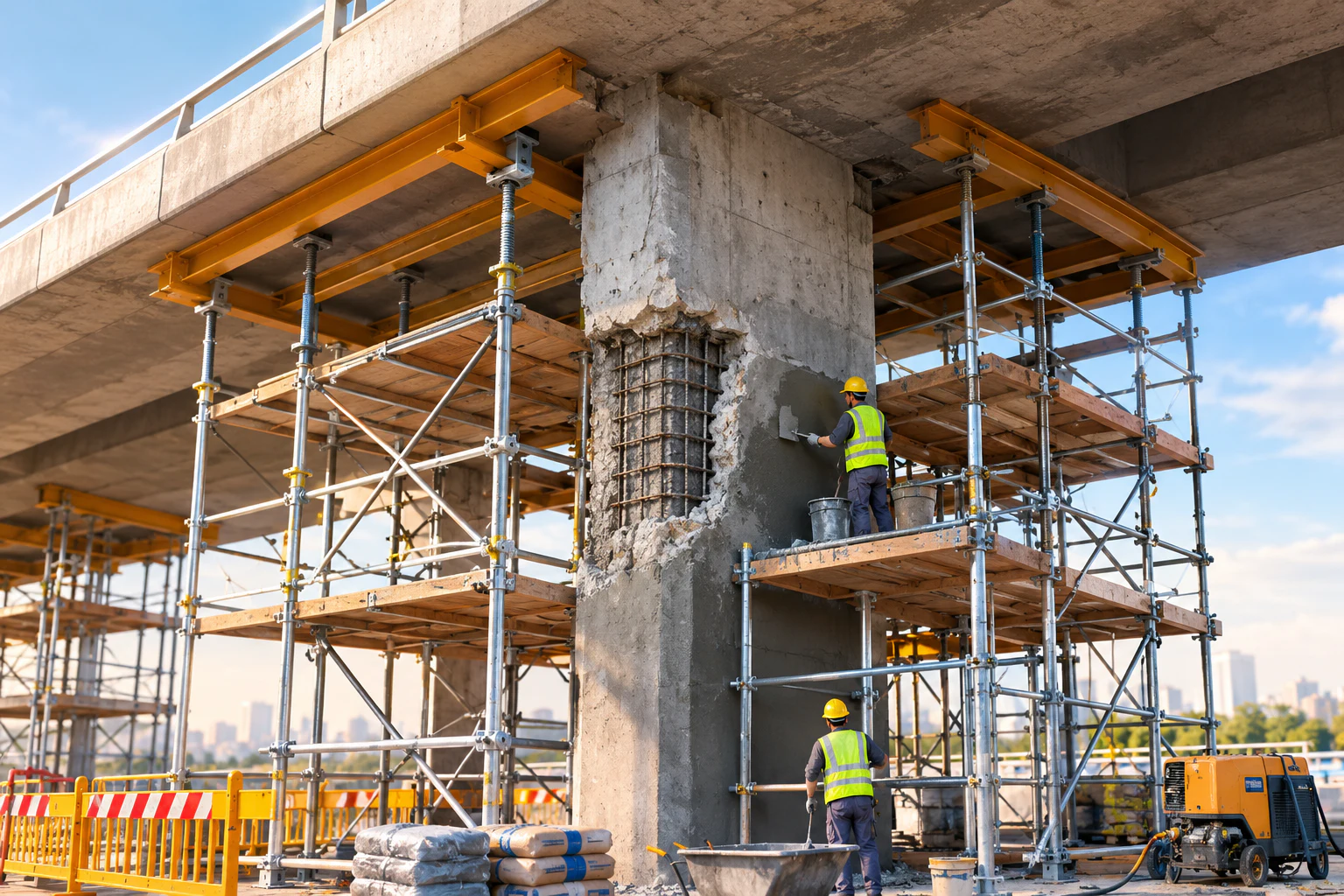
We give solutions for Concrete & Steel Structures Repair and Protecting.
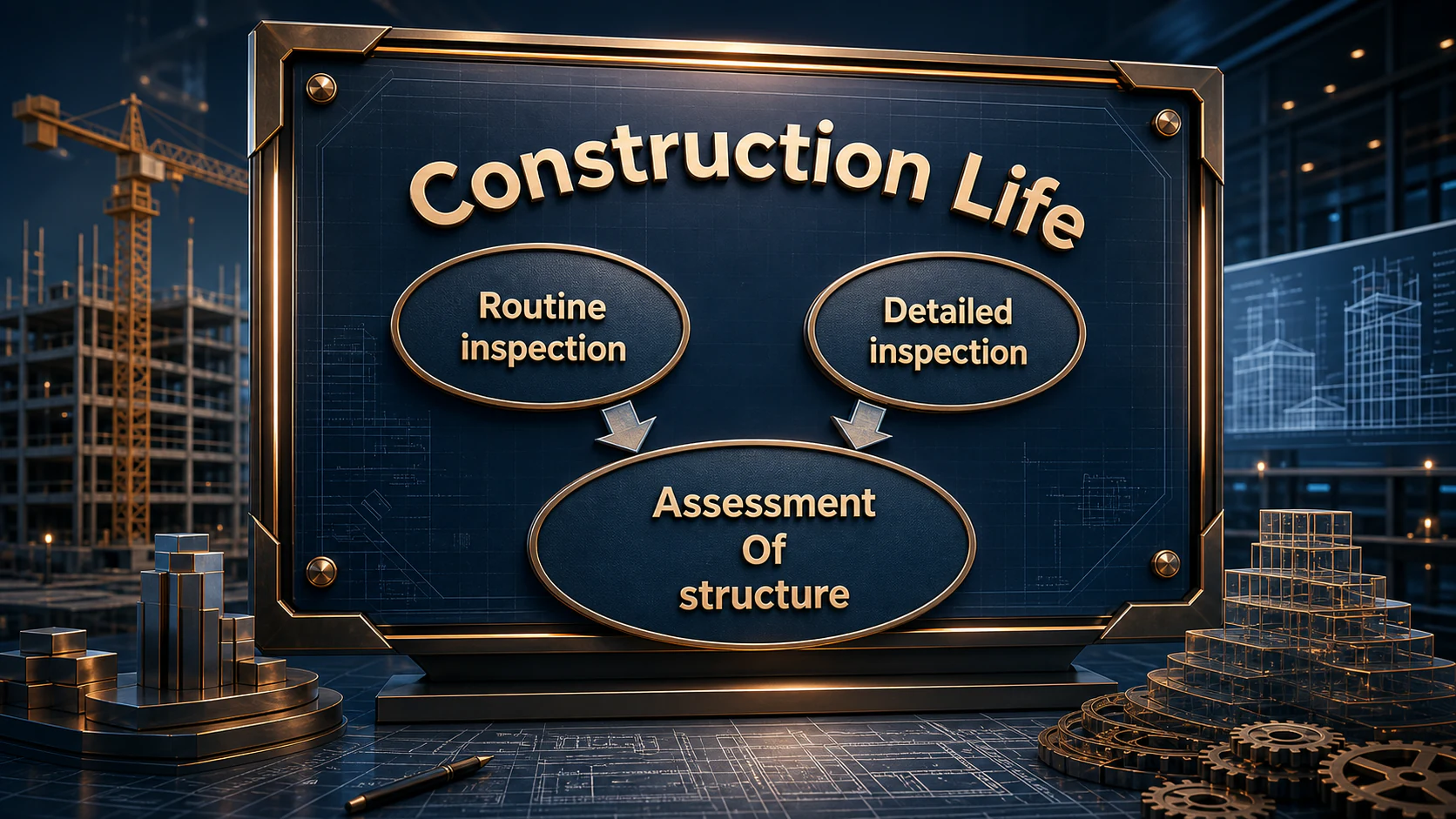
We simplify the process according to next diagram:
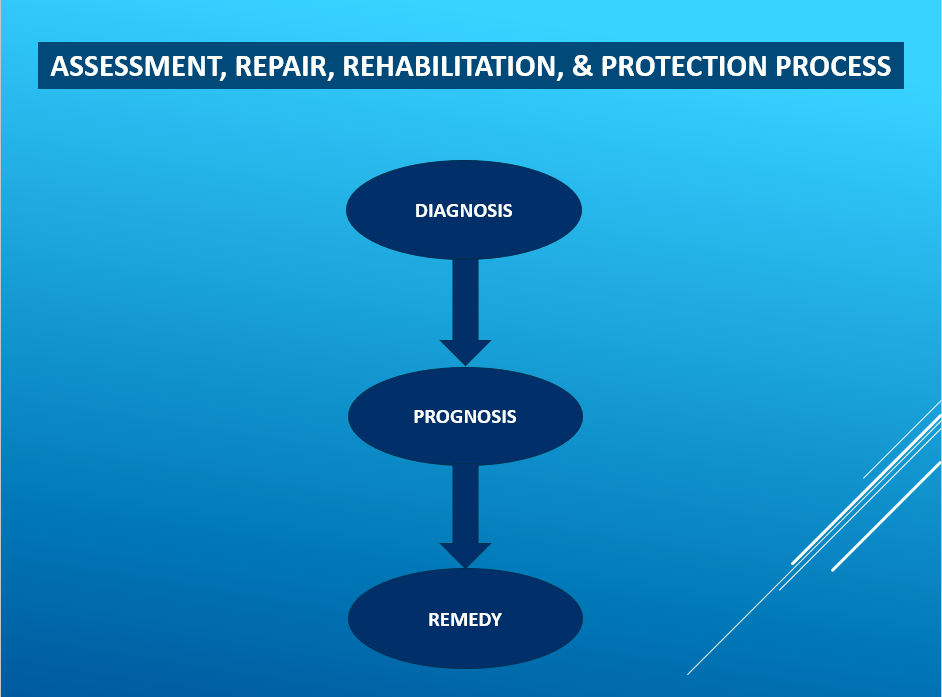
We provide packages of services in these fields, specifically practical diagnosis, which involves evaluating defects that affect the construction over time. These defects typically arise from environmental conditions, aging of the construction, and workability conditions.
To address these issues, we put forward smart, efficient solutions as part of our prognosis. For each case, we specify several methods, including the use of concrete jackets, strengthening of the section with additional steel, carbon fiber reinforcement, prestressing methods, and protection of the existing structure.
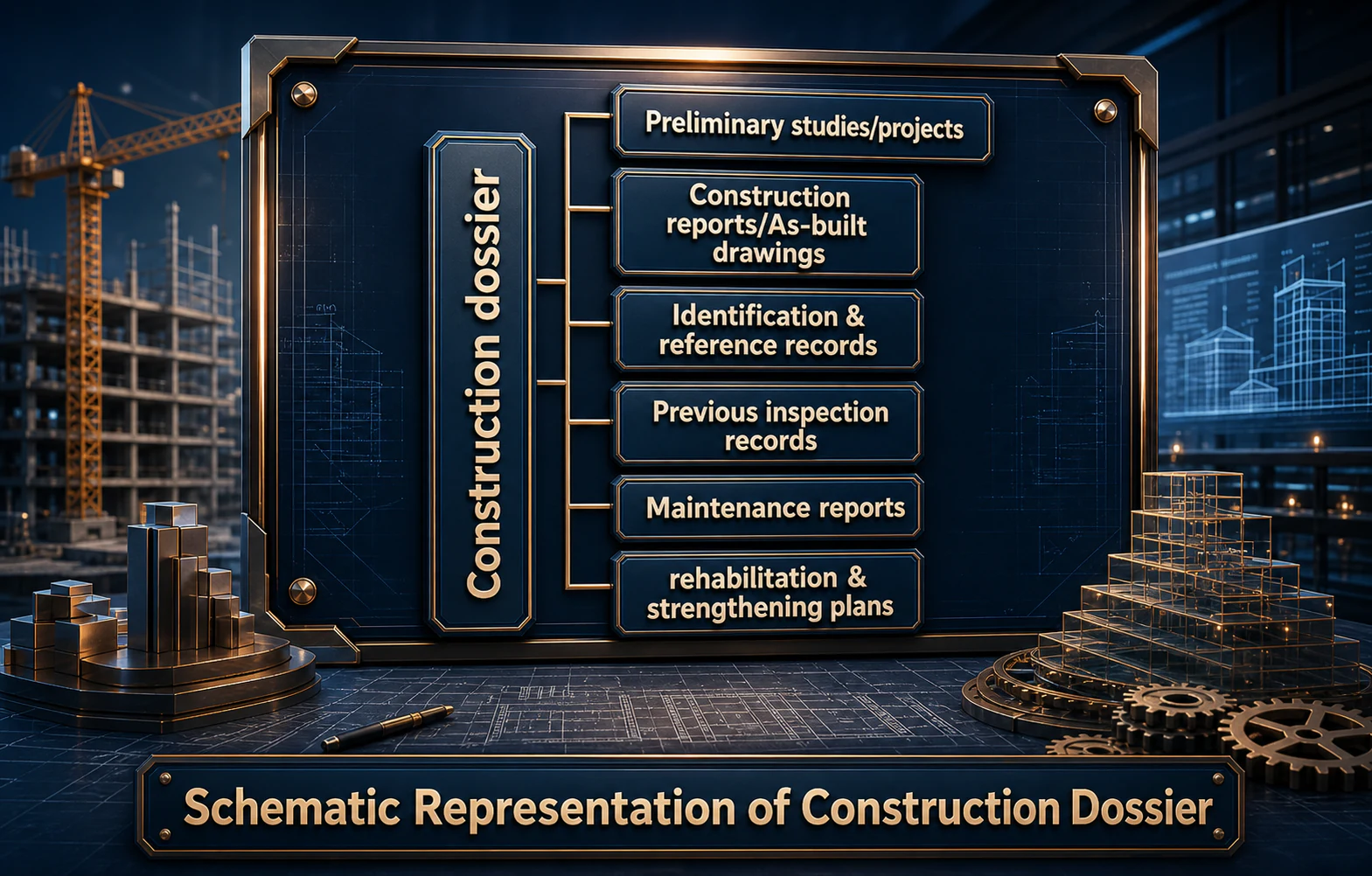
Moreover, we must check all documents related to the structure’s history and study its full range of conditions. According to standards and guidelines, several assessment procedures are proposed. Then, we give our professional advice.
The purpose of assessing an existing structure should be to ensure that its integrity remains acceptable, even if it is in a degraded state. In order to achieve this, several assessment procedures are recommended in standards and guidelines. Therefore, we focus on construction assessment to help clients make informed decisions regarding aging, rehabilitation, and life‑extension of the structure.
Finally, we perform the necessary structural analysis both before and after repair. Consequently,
We are Always Ready to Assist Our Clients in
Concrete / Steel Structures repair and protecting
For any Construction, the Stakeholders Need a Process of Assessment, Concrete & Steel Structures repair, Rehabilitation, and Protection:
Integrated Construction Management Solutions: Ensuring Structural Integrity and Longevity:
We are specialized in delivering a holistic suite of services designed to ensure the structural integrity and extend the lifecycle of construction projects. Specifically, we are experts dedicated to providing stakeholders with a meticulous process encompassing assessment, repair, rehabilitation, and protection of construction.
First, Comprehensive Diagnostic Assessments:
Our approach begins with a rigorous diagnostic assessment, identifying and evaluating potential defects in constructions that may have developed over time due to environmental exposure, natural aging, and operational conditions. Consequently, this initial phase is crucial for setting the groundwork for targeted interventions.Next, Tailored Rehabilitation Strategies:
Based on our findings, we develop customized rehabilitation plans using advanced methodologies. For example, our solutions may include the application of concrete jackets, reinforcement through additional steel sections, the integration of carbon fiber technologies, and the application of prestressing techniques to enhance structural capacities.In addition, Proactive Protection Measures:
Understanding the importance of preventative measures, we offer strategies to protect existing structures from future damage. To this end, we perform a thorough analysis of historical documentation and conditions to forecast potential issues and implement effective protective solutions. Moreover, we have to be sure that the efficiency of the structure is still acceptable, even though it may be in a degraded state.Furthermore, Standards‑Compliant Procedures:
Our service packages are designed in strict compliance with industry standards and guidelines. Thus, we ensure that each assessment and repair strategy not only addresses immediate concerns but also aligns with best practices for long‑term structural health.Additionally, Decision Support for Stakeholders:
We provide stakeholders with critical insights into the aging process, potential rehabilitation needs, and life‑extension options for structures. As a result, our assessments help inform decision‑making processes, ensuring that all actions taken are informed, strategic, and beneficial for the structure’s longevity.Finally, Post‑Repair Analysis and Compliance Checks:
Following any intervention, we conduct detailed structural analysis to verify the efficacy of repairs and ensure compliance with relevant building codes. Therefore, this ensures that each structure not only meets but exceeds safety and performance standards post‑rehabilitation.Let me know if you’d like the transition words to be more subtle, more varied, or adjusted for a specific tone (e.g., formal, technical, or promotional).
The Domain of Intervention for Concrete & Steel Structures Repair and 'Retrofitting of Structural Elements' Includes
Among the possible interventions, firstly, we consider local or overall modification of damaged or undamaged elements (repair, strengthening, or full replacement), taking into account the stiffness, strength, and/or ductility of these elements. Secondly, we may add new structural elements, such as bracings or infill walls, steel, timber, or reinforced concrete belts in masonry construction. Thirdly, modification of the structural system can be carried out, including elimination of some structural joints, widening of joints, elimination of vulnerable elements, or modification into more regular and/or ductile arrangements. In addition, a completely new structural system can be introduced to sustain some or all of the entire seismic action. Furthermore, existing non-structural elements may be transformed into structural elements. Moreover, passive protection devices can be installed through dissipative bracing or base isolation. Additionally, restriction or change of the building’s use is another option. Finally, partial, safe demolition may be considered.
Monitoring Policy and Inspection Process
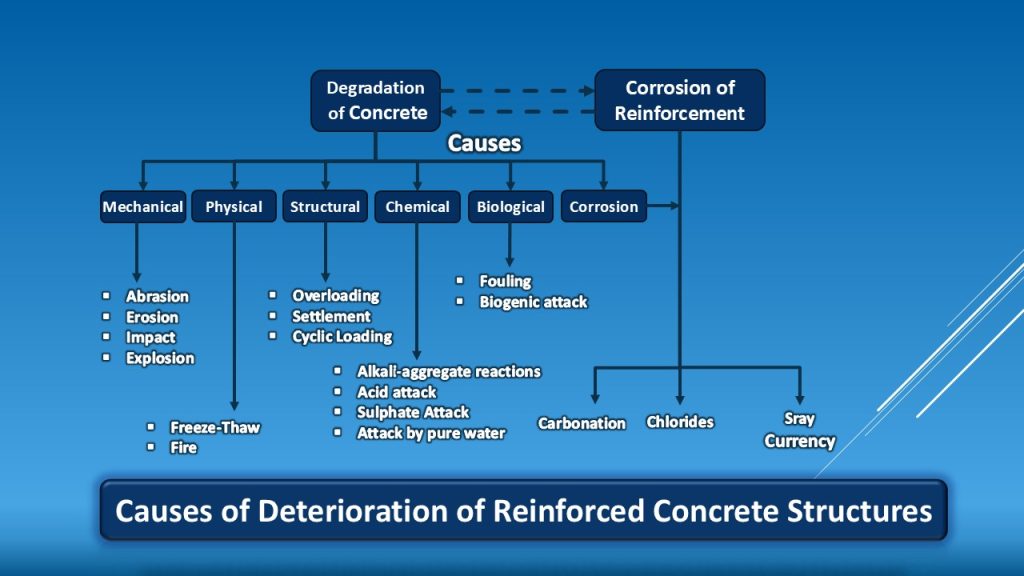
Deterioration of Reinforced Concrete Structures
The Protection of Structure Against Water, Heat, Vibration and Erosion:
To begin with, we give up‑to‑date modern solutions using economic and convenient materials. Specifically, we offer repair and rehabilitation of actual failed or low‑performed waterproofing. In addition, we provide repair of heat insulation to increase the building’s ability to resist heat transfer. Furthermore, we ensure protection against vibration. Moreover, we deliver sound insulation and protection against echoes.
Finally, one of the most important protections for significant constructions is protection against corrosion, which ensures a long‑life structure that resists aging. Therefore, we carefully discuss all available solutions to obtain the optimum solution for a given construction.
How to Mitigate Structures’ Ageing:
Requirements of Sustainability:
1-Regular inspections have to be done.
2- Structural Monitoring.
3- Mitigation of Damaging.
4- Mitigation of Corrosion Damages.
5- Protection System.
6- Mitigation of Fatigue and Other Damage. Or Fatigue stiffening.
Are in the three dimensions:
1- Economics
2- Ecology
3- Social values
All of these requirements urgently need concepts of repair & rehabilitation
Inspection Methods:
According to the structure, suspected defect, access conditions and monitoring objective, we select one or more complementary inspection methods for each case.
Visual and Electromagnetic Inspection Methods:
- General Visual Inspection.
- Close Visual Inspection.
- Flooded Member Detection.
- Ultrasonic Testing.
- Eddy Current Inspection.
- Magnetic Particle Inspection.
- Alternating Current Potential Drop.
- Strain Monitoring.
- Acoustic Emission Monitoring.
- Leak Detection.
- Air Gap Monitoring.
- Structural Monitoring.
The final inspection program is tailored to the structure and may combine several methods.
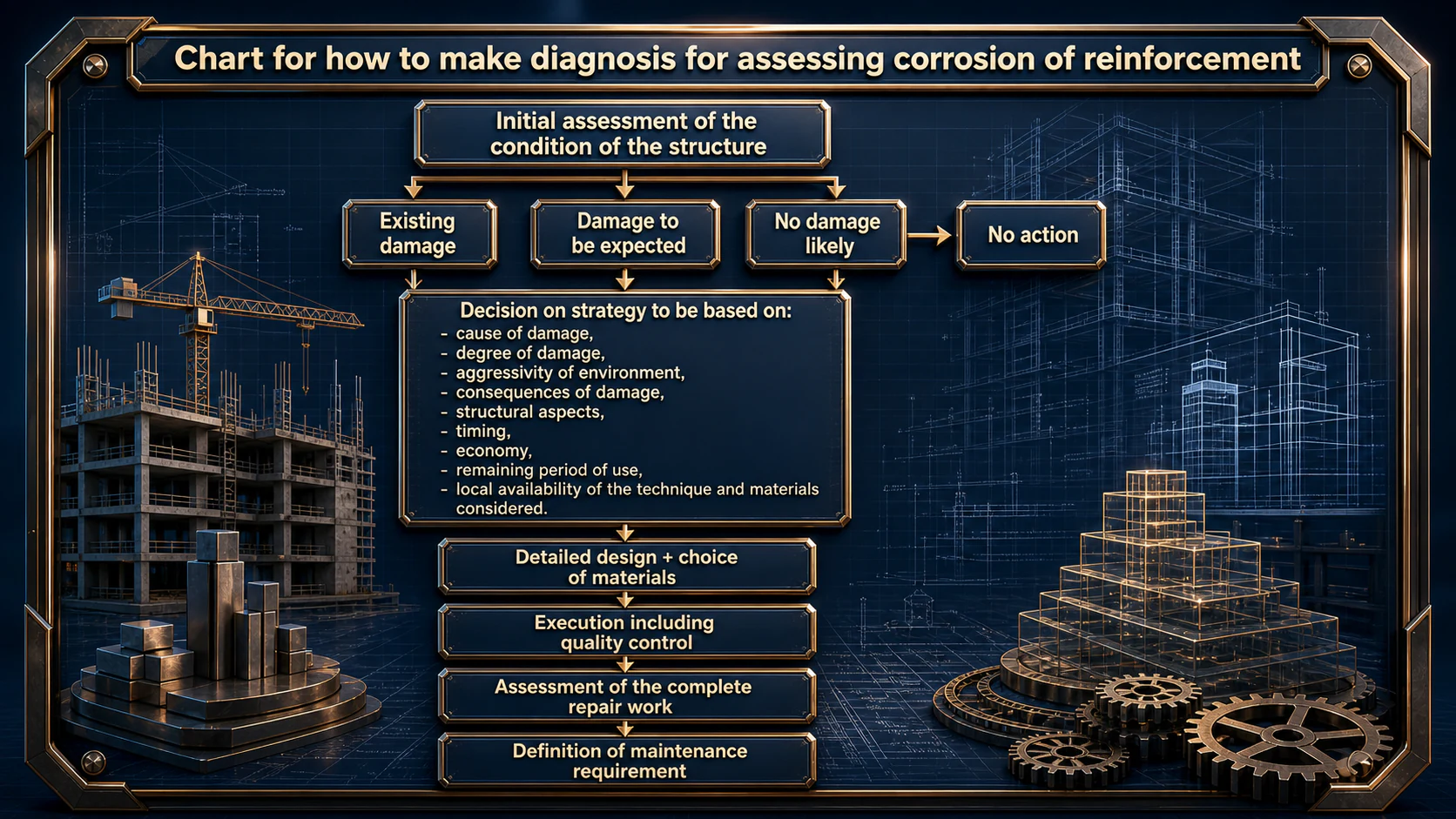
Structural Repair Diagnosis & Rehabilitation Process
Explore the assessment, diagnosis, repair and inspection sequence.